Mukadua: A Two-Faced Font for Versatile Branding
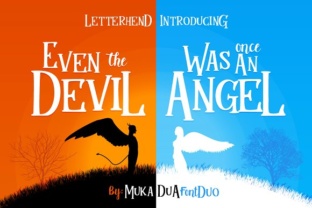
There’s a moment in every branding project where you open a blank brand board and feel the weight of possibility. That’s exactly what happened when I first tested Mukadua on a boutique identity project. The font duo, consisting of a serif and a script typeface, immediately caught my eye—not just for its visual appeal, but for its dual personality. Mukadua means two-faced, and that’s precisely what it delivers. As a brand designer who has used this font in logo drafts, packaging mockups, and social media layouts, I can confidently say that Mukadua is a versatile tool for creative professionals looking to balance elegance with flair.
Mukadua for Boutique Logos and Elegant Branding
I was working on a boutique client who wanted something refined yet approachable. The initial logo concept leaned heavily on a classic serif, but I felt it lacked a touch of personality. That’s when I brought in Mukadua’s serif font. Its clean lines and subtle flourishes gave the logo a sense of sophistication without being too formal. It worked beautifully as a headline font, anchoring the design while allowing the script variant to add a handcrafted feel.
What I love about Mukadua is how it adapts to different contexts. On a business card, the serif font maintains a professional edge, while the script version adds warmth and character. This duality makes it perfect for brands that want to communicate both reliability and creativity. Whether it’s a logo or a tagline, Mukadua ensures consistency across all design assets without sacrificing individuality.
Mukadua for Café Visuals and Warm Branding
Later, I used Mukadua in a café refresh project. The owner wanted a brand that felt cozy and inviting, with a touch of modernity. I paired the serif font with a sans-serif display typeface for the menu headers, creating a contrast that drew the eye. The script font was reserved for promotional materials and social media posts, where its fluid strokes added a personal touch.
One thing I noticed was how well Mukadua performs at smaller sizes. Unlike some serif fonts that can look cramped, Mukadua’s structure remains legible even when scaled down. This made it ideal for signage and product labels, where clarity is key. I also appreciated the variety of weights and styles included in the font duo, which allowed me to experiment with hierarchy and emphasis without overcomplicating the design.
Mukadua for Handmade Shop Identity and Personal Touch
When working with a handmade shop, the goal was to create a brand that felt authentic and artisanal. Mukadua’s script font became the star of the show, used in everything from packaging labels to website headers. Its elegant curves and delicate details mirrored the craftsmanship of the products themselves.
However, I did notice that the script variant isn’t always the best choice for long body text. While it looks stunning in headlines and short phrases, it can become visually heavy when used extensively. For such cases, the serif font provides a more readable alternative. This versatility is one of the strengths of Mukadua—its ability to switch between formal and informal tones depending on the project’s needs.
Mukadua for Creative Studio Branding and Design Assets
In a creative studio identity project, I used Mukadua to reinforce the brand’s artistic nature. The script font was used in posters and social media graphics, while the serif variant appeared in print materials and web headers. The combination created a cohesive visual language that reflected the studio’s ethos.
One thing I would recommend is testing Mukadua in real-world scenarios before committing to it. I found that using the font on a sample mockup helped me understand how it would perform in different environments. For instance, I noticed that the script font looked great on a digital banner but might not be the best choice for a printed brochure due to its intricate details.
Mukadua for Web Design and Social Media Graphics
When designing a website header, I chose the serif font for its readability and professionalism. The script font was used sparingly in call-to-action buttons and social media graphics, where it added a decorative element without overwhelming the user experience.
Mukadua’s webfont availability is a plus, especially for clients who need their brand to be accessible across multiple platforms. However, I always remind them to check the commercial license before using the font in client work or print-on-demand products. Proper licensing is essential, especially when dealing with high-traffic websites or branded merchandise.
Mukadua for Packaging and Product Labels
For a skincare product line, I used Mukadua’s serif font on packaging labels and product tags. Its clean, structured appearance complemented the minimalist aesthetic of the brand. The script font was used in promotional flyers and Instagram stories, where it added a touch of elegance and charm.
One limitation I encountered was the script font’s performance in small print. While it looked beautiful in larger formats, it became difficult to read at smaller sizes. This made it less suitable for long body text or fine print applications. That said, for short phrases, headlines, and decorative elements, Mukadua’s script font is a standout choice.
Overall, Mukadua is a powerful font duo that offers designers a wide range of possibilities. Whether you’re working on a boutique logo, café branding, or creative studio identity, this font can elevate your design with its unique blend of elegance and personality. Just remember to test it in real contexts and pair it wisely with other fonts to maintain visual harmony. With its versatility and charm, Mukadua is a must-have for any designer’s toolkit.