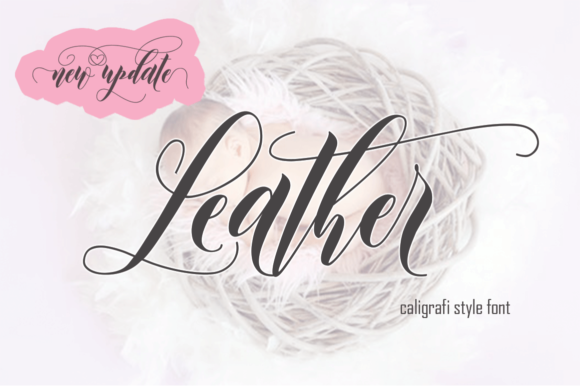
Leather: A Script Handwritten Font for Editorial Elegance
When I was redesigning the header for my lifestyle blog, I needed a font that felt personal yet professional. I wanted something that could carry the weight of a title without overshadowing the content beneath it. That’s when I discovered Leather, a Script Handwritten font with a quiet confidence and a subtle elegance that immediately caught my eye.
Leather for Wedding Invitations and Elegant Branding
Leather is not just another Fonts option—it’s a thoughtful choice for editorial design that carries a sense of craftsmanship. Its handwritten style feels warm and inviting, making it ideal for occasions where tone matters as much as typography. I’ve used Leather in wedding invitations and branding materials where a touch of personality was needed without being too playful or unprofessional.
The font’s rhythm is smooth and natural, mimicking the flow of handwriting without the heaviness of overly stylized scripts. It works especially well in smaller text sizes, like logos or signature elements, where clarity and charm are equally important. For brands looking to create a handcrafted feel, Leather offers a versatile tool that can be adapted across multiple platforms—from social media graphics to printables.
Leather for Lifestyle Blogs and Content Headers
In the context of a lifestyle blog, Leather can elevate the visual hierarchy of your content. I tested it on a few blog headers and found that it adds a layer of sophistication that complements both casual and curated content. The font’s soft curves and gentle strokes make it perfect for titles that need to stand out but still feel approachable.
Pairing Leather with a clean sans serif font for body copy creates a nice contrast. This balance ensures readability while allowing the headline to capture attention. For example, using Leather for article titles and a modern serif font for the rest of the text helps maintain a cohesive look without overwhelming the reader.
Leather for Recipe Ebooks and Printables
One of the most surprising uses for Leather has been in recipe ebooks and printable guides. The font’s elegant yet approachable style fits perfectly with food-related content, adding a touch of warmth and personality. I used it for chapter openers and pull quotes in a recent cookbook project, and the results were striking.
Leather’s extra characters, including ligatures and alternate glyphs, add depth to the design without complicating the layout. These features are especially useful for creating decorative accents or customizing headers. When exporting to PDF, the font maintains its quality, ensuring that the final product looks polished and professional.
Leather for Digital Magazines and Newsletter Graphics
Digital magazines and newsletters often require fonts that are both readable and visually engaging. Leather strikes this balance by offering a script style that doesn’t compromise legibility. I’ve used it in newsletter headers and promotional graphics, where its elegant curves help draw the eye without distracting from the message.
For web use, it’s important to consider how Fonts like Leather perform on different screen sizes. While it excels in larger text, it may not be suitable for small captions or dense paragraphs. In those cases, pairing it with a more structured font ensures that the content remains accessible and easy to read.
Leather for Content Branding and Visual Identity
Content branding is all about consistency and character, and Leather brings both to the table. Whether you’re designing a logo, a cover page, or a social media graphic, this font adds a unique touch that reflects the personality of your brand. Its handwritten nature makes it particularly well-suited for creative industries like publishing, design, and education.
When considering font pairing, think about how Leather interacts with other typefaces. A display font like Leather can work beautifully with a classic serif or a modern sans serif, depending on the desired mood. This flexibility makes it a valuable asset for any designer looking to build a strong visual identity.
Before using Leather in commercial projects, always check the licensing terms and included styles. Ensuring that you have access to all necessary formats and weights will help you maximize its potential across different platforms and applications.